Wednesday, July 3, 2013

Join A TASTE OF NOSE WORK Workshop!

Join A TASTE OF NOSE WORK Workshop!
Need something new for your dog that is easy and highly enjoyable, which you can play now? Want to get out and explore and play with your dog? Just what is this Nose Work all about? The activity and sport of Nose Work is designed to develop your dog’s natural scenting abilities by using their desire to hunt and their love of toys, food and exercise. It’s a phenomenal way for your dog to have fun, build confidence, overcome environmental challenges, and use more critical thinking while burning lots of mental and physical energy, and it all starts with a box! Join us and see for yourself what it’s all about. Facilitated by with Carol Wyatt of the North Texas Sniffers. To be held on Saturday, July 27th from 10a to 5p at Pappy's Pet Lodge in Roanoke. Sniff it out at http://www.training-spot.net/workshops.html.

Hot Pavement Safety

Before you take your dog for a run, put your hand on the asphalt - if it's too hot for your hand, it's too hot for your dog's paws!
Toxin Tuesday is back! Hot pavement is a summertime hazard that many people don't think about. Please "share"!

Sniff out Dallas Dog Life for all the dog-friendly events in the DFW area!

Sniff out Dallas Dog Life for all the dog-friendly events in the DFW area!

The Independence Day holiday is almost here, and most of us are looking forward to the long weekend and having a fireworks-filled night with friends and family. Unfortunately, what we think is great fun for us is not always fun for our dogs, especially during this holiday.

Each year, countless dogs go missing during the 4th of July holiday because they are so frightened of the loud pops and excitement that they will do anything - including digging holes under fences, knocking out window screens, opening patio doors - to get away from the noise. Other pets become ill when they are allowed to eat human foods that are dangerous to dogs, such as onions, avocado, and alcoholic beverages.
Check out the latest blog post for some tips to keep your dogs safe this Fourth of July.

Reminder: as we enter the hottest months of the year, the number of outdoor events that we'll see on the calendar will dwindle a bit. So we'll try extra hard to find the indoor and evening events that are dog-friendly so that your dogs can maintain their active social lives. Be sure to check out the Events Calendar for the latest event postings.


Dealing with Firework Fear in Your Dog

Dealing with Firework Fear in Your Dog

The countdown is already on for the Fourth of July. While that can be a fun-filled event for many families, we know that many dog lovers, like us, dread the holiday every year due to their fearful dogs.
Our dog Irie is afraid of fireworks (as well as thunder, gunshots, and other loud sounds). We have been able to manage her fears with a variety of techniques, patience, and products. She’s still fearful but she’s more comfortable these days during fireworks or thunder than she was in years past.
This week on our DOG TRAVEL EXPERTS show, Tracie and I discussed fireworks phobia. After the show, many of you emailed me and asked more about fireworks and how we handle them. I wanted to share some tips and products we’ve used in our home to help manage Irie’s fear.

Tips

As I mentioned, we’ve used a combination of products and techniques to help ease Irie’s stress; no one thing “cures” her of her fear but several do help:
  • We make sure Irie is indoors before fireworks might possibly begin. We have the television on louder than usual during this time.
  • We don’t live in an area that’s illuminated by fireworks; the sounds she hears are distant. We don’t have to worry about lights from the fireworks but, if we did, we’d make sure she was either in a room with no windows or in one with blackout curtains. When we have a thunderstorm, we know that the night storms, with the flashing lightning, are more frightening to her.
  • We try to distract her with chews. She LOVES to chew so we keep either a bully stick or a new marrow bone ready to distract her.
  • When she panics and runs through the house, we open up a (windowless) closet for her. She likes to burrow beneath my hanging clothes in the closet.
  • If she runs around inside the house, we put a leash on her and walk with her, back and forth, from one end of the house to another. (We do NOT go outdoors.) Dogs cannot multitask so this puts her mind on walking.
  • We put pee pads in front of the front door. We know that she will hold it as long as she can but that she will not go outdoors during fireworks or a loud storm. She will go to the front door since that’s her usual way out to her “restroom” so she understands the use of the pee pads.
  • I try to encourage her to cuddle on the couch. This often works; she’s a big girl but she likes to squeeze behind me and lie between my back and the back of the couch. She feels secure that way.
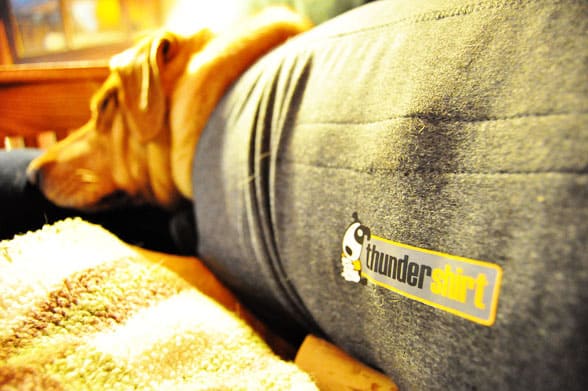
  • We put a compression garment on her before the fireworks start. We use a Thundershirt; we’re going to be reviewing Anxiety Wrap in July. If you don’t have a swaddling garment, you can improvise with an Ace elastic bandage. Wrap the torso like a hug (not tightly). A t-shirt, dog sweater or other garment can also be used to give that feeling of swaddling.


Why long toe nails are harmful to your dog’s health

Why long toe nails are harmful to your dog’s health

Some dogs hate nail trimming, others merely tolerate it, almost none like it. Some dogs need tranquillizers to make it through the process without biting, while others sleep through the procedure without a care. No matter what your dog’s personal take is on nail clipping, it is something you should do for your IGs regularly to keep from harming their skeletal structure.
A dog’s nails are important parts of their anatomy. Unlike cats, dog claws are not weapons, but are used when he runs to grip the ground when accelerating and turning corners. Outdoor dogs run around enough over different surfaces and wear their own nails down. But our house-bound companions don’t get that natural wear from carpet, hardwood, or vinyl flooring. And since IGs have nails that grow more quickly than most other breeds, it’s easy for them to get too long.
Having long nails changes the way a dog carries himself. The diagram below shows how a long nail causes the bones in the foot to flatten and the Metacarpal, Phalanx I and Phalanx II bones to sit more angled every time the dog walks or stands. The different angle of the bones when pressure is applied causes joint stress and can lead to joint pain and arthritis. It also leads to dropped wrists which make the dog look flat footed. Women reading this article can probably relate if they think about wearing high heels all the time. Long toe nails essentially do the same to dogs by changing the natural alignment of leg bones which adds torque or twisting to the joints. Personally, high heeled shoes wreak havoc on my knees and I suffer from knee joint pain for days after wearing them. I can’t imagine the pain a dog goes through whose owner never trims his nails or doesn’t trim nails often enough.
toenails 300x166 Why long toe nails are harmful to your dogs health
Left: proper alignment with short toenail. Right: angled alignment because of long toenail. Image provided by Dr. Lisa Kluslow
Changing the natural alignment also makes the dog less steady on his feet and can contribute to an increased probability of broken legs. If the dog’s joints are out of whack, he can’t catch himself from falling or landing as well. Again, if you compare how steady you ladies are in sneakers compared to high heels you can relate to how a dog with long nails might feel all the time. Since broken legs are already such a problem for Italian Greyhounds, this makes keeping your Iggy’s nails trimmed even more important.
The image shows how the bones of the paw and wrist angle back when a dog has long nails, but the damage doesn’t stop there. All the bones in a dog’s body are connected and the leg bones connect all the way up to the spine. Some of you might relate to how an injury on one part of our body can cause us to carry ourselves differently and create pain in another part of our body. Unfortunately, our dogs can’t tell us when they have a headache or shoulder ache and many times we miss the slight signals that they are in pain. Since dogs can’t trim their own nails, it’s up to us to make sure this dog maintenance is performed before the pain sets in.
wheretocut Why long toe nails are harmful to your dogs health
Where to cut a dog's toe nail.
IGs usually need their nails trimmed every two to three weeks, if not more often. Frequent walking (daily, fast paced, long walks) can help wear down nails and increase the time between trimmings. For our dogs, nail trimming is a two person job and my husband holds dogs on his lap with their feet sticking outwards while I clip. The red line in the diagram to the left shows where to cut the nail. The nail comes straight out, and at the point where it starts to bend downward, you should cut at a 45 degree angle. It’s always a good idea to have Kwik Stop or another blood stopping product on hand in case you hit the quick. If trimming nails is not your forte, groomers or vet clinics are good alternatives to keep your dogs’ nails well groomed.
Some dog owners prefer to grind down (commonly using a Dremel tool) their dog’s nails. For comprehensive instructions on how to Dremel your dog’s nails, please refer to Tia Resleure’s article “The Importance of Proper Nail Grooming to Dogs, especially Italian Greyhounds!”.
Unfortunately, it is easy to overlook this basic grooming. Many of the dogs we take in to rescue, regardless of what their situations were before, need a nail clipping when they arrive. Similarly, I’ve noticed at playdates there are always a couple IGs with very long claws. Remember though, that trimming claws is not merely a cosmetic issue, but it is also a health issue. You and you IG may dread biweekly trims, but it is one of the most basic things you can do to take stress off your pups’ joints as they age.

Sodium Bisulfate: It Might Burn Your Pet's Mouth, Throat, and Stomach - But They're Adding It to Food Anyway

Sodium Bisulfate: It Might Burn Your Pet's Mouth, Throat, and Stomach - But They're Adding It to Food Anyway

original post: http://healthypets.mercola.com/sites/healthypets/archive/2013/06/28/sodium-bisulfate.aspx

By Dr. Becker
Anticipated regulations from the Food Safety Modernization Act will affect pet food production. According to PetfoodIndustry.com, as a result, product safety has jumped to the top of the priority list for pet food manufacturers.
One of the primary concerns, especially with the rash of recalls over the last few years, is that humans are being exposed to salmonella bacteria from processed pet food – in particular, dry food.
Pet food producers are implementing a variety of tactics to control salmonella contamination, including more vendor inspections, hazard analysis and critical control point plans, and hold-and-release programs. As you might expect, additives are also being looked at for their ability to control salmonella. One of those substances is sodium bisulfate.
A producer of sodium bisulfate and scientists at Kansas State University are collaborating to study the ability of this substance to prevent recontamination by salmonella after the pet food extrusion process.

Adding Sodium Bisulfate to Kibble May Help Control Salmonella Contamination

Sodium bisulfate is not to be confused with menadione sodium bisulfate, which is synthetic vitamin K3. It should also not be confused with sodium bisulfite, which is a chemical preservative used in fruits and wines.
Sodium bisulfate, also known as sodium hydrogen sulfate, is an acid salt. Its primary function is acidification. It is currently used in some processed pet foods to acidify urine, reduce pH levels, and control microbes in soft treats and liquid digest. But according to PetfoodIndustry.com, “New research conducted at independent laboratories indicates that sodium bisulfate controls Salmonella contamination on the surface of extruded dry petfood.”
Dry pet food is heat-treated twice – once during pre-conditioning and again during extrusion. The very high temperatures used in these processing steps should kill the salmonella present in the food. It is therefore suspected recontamination occurs primarily after the food is extruded – possibly inside the conveying system or from airborne dust in air-handling systems.
If either of those sources of contamination is the cause, it’s assumed the salmonella is only on the outside of the kibble. This is where sodium bisulfate comes in. It is a “surface-active” compound that is highly acidic and in a physically dry state. This means it can be turned into a powder and applied to the surface of kibble for purposes of salmonella control.

And Now for the Bad News…

The good news is pet food companies are actively searching for ways to reduce human exposure to salmonella bacteria in their products.
The bad news? Adding a substance like sodium bisulfate to dry pet food is a little like putting lipstick on a pig (no offense to pigs). The pig may look more attractive. It may not even look like a pig from certain angles, but it’s still a pig. Salmonella-free kibble is still kibble – highly processed, double heat-treated pet food that lacks moisture and other nutrients that can only be obtained from fresh, whole, real food.
In addition, you should know that sodium bisulfate isn’t an entirely benign additive. According to MedlinePlus, in humans, symptoms from swallowing more than a tablespoon of this acid can include burning pain in the mouth, diarrhea, vomiting, and severe low blood pressure.
Sodium bisulfate is produced in a “pet grade” as well as a technical grade. I wasn’t able to find a Material Safety Data Sheet (MSDS) on the pet grade product, but the MSDS on the technical grade product states that inhalation of the substance damages the mucous membranes and upper respiratory tract. Sodium bisulfate is classified as a corrosive, so swallowing it can cause severe, even fatal burns to the mouth, throat and stomach; touching it can cause severe skin burns. Chronic exposure can result in lung irritation, tracheal bronchitis, persistent coughing, and corrosion of teeth.

My Recommendations

The danger of salmonella poisoning from pet food is a risk to the humans serving the food – not the dogs or cats eating it. Healthy pets are able to handle a much higher bacterial load than their owners. It’s important to understand that distinction.
If you feed your pet kibble (which I don't recommend), the following simple handling precautions should keep you and your family safe from contamination:
  • Wash your hands thoroughly after handling any pet food or treats.
  • Don't allow very young children, elderly people or those who are immunocompromised to handle pet food or treats.
  • Keep all pet foods and treats away from your family's food.
  • Do not prepare pet foods in the same area or with the same equipment/utensils you use to prepare human foods.
  • Do not allow pets on countertops or other areas where human food is prepared.
  • Feeding pets in the kitchen has been identified as a source of infection. If you can arrange to feed your pet in an area other than your kitchen, consider doing so. Alternatively, feed your pet as far away from human food preparation areas as possible.
I don’t recommend feeding your dog or cat a commercial pet food with special additives designed to control salmonella. I’m an advocate of wholesome, natural diets for pets (and people). I’m not in favor of chemicals added to food. And I certainly don’t recommend feeding your pet or any pet a highly processed, preserved kibble dusted with a potentially corrosive substance.


Monday, July 1, 2013

Upcoming Pet Friendly Events- Fort Worth Cats Bark in the Bark Saturday, July 6, 2013, 6:00 PM - 9:30 PM

Fort Worth Cats Bark in the Bark

Event Date & Time
Saturday, July 6, 2013, 6:00 PM - 9:30 PM
 
Event Location
LaGrave Field
301 NE 6th Street
Fort Worth, TX 76164
 
Event Description

logo-fwcatsThe Fort Worth Cats are having their annual “Bark in the Park” at Le Grave field in Ft. Worth on Sat. July 6th. Gates open at 6:00 and Game starts at 7:05. Tickets are between $7-$14. Majestic Barkery will also be out there selling treats.

To purchase tickets, please visit the Fort Worth Cats website.

For more information about Majestic Barkery, please visit their website at http://www.majesticbarkery.com.